Health and Safety Policy — Skip Hire Kilburn
 Purpose and scope. This Health and Safety policy sets out the commitments and systems that Skip Hire Kilburn and its staff use to protect employees, contractors, customers, visitors and the general public during the delivery of skip hire and rubbish removal services. The policy covers operational activities including skip placement, loading, transport, transfer, and site clearance for residential and commercial work across our service area. It is intended to be applied in conjunction with relevant statutory obligations and good industry practice while remaining concise and practicable.
Organisational responsibilities are assigned to ensure accountability throughout the business. Senior management retains ultimate responsibility for health and safety performance and must ensure appropriate resources are provided. Supervisors and team leaders are responsible for implementing safe working procedures on site, including traffic control and manual handling supervision. Every employee is required to comply with safe systems of work and to report hazards, near misses and incidents promptly.

Risk assessment and control measures
Before work begins, a systematic risk assessment must be completed for each job. That assessment identifies potential hazards associated with skip delivery, siting, loading and collection. Typical hazards include manual handling, moving vehicles, falling objects, hazardous materials in waste, slips, trips and falls, and contact with sharps or contaminated items. Controls follow the hierarchy of prevention: first eliminate the hazard where practical, then substitute, apply engineering controls, use administrative controls and finally personal protective equipment (PPE). The company provides PPE and appropriate training for staff involved in skip hire services.Training, competence and supervision form a cornerstone of our approach. Staff receive induction training, periodic refresher courses and task-specific briefings. Training covers safe loading techniques, correct use of lifting equipment and restraints, vehicle loading limits, and identifying restricted or hazardous waste. Records of training and competence assessments are maintained and reviewed. Supervisors conduct regular site inspections and toolbox talks to ensure compliance and reinforce safe behaviour.
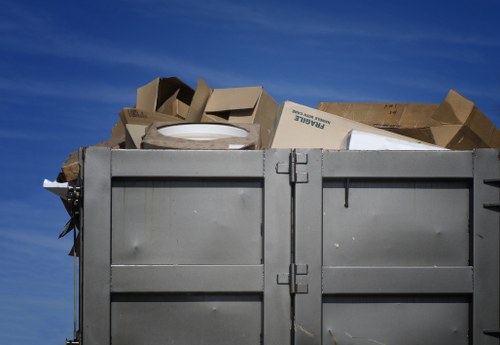
Vehicle safety and transportation of waste
All vehicles and lifting equipment used for skip hire services are regularly inspected and maintained in line with manufacturer recommendations and legal requirements. Drivers must be appropriately licensed and trained, and they must follow safe driving practices including secure parking, use of warning lights and deploying traffic management measures where necessary. Loads must be secured to prevent spillage or shifting during transit. Provisions are in place for segregation and safe containment of hazardous or potentially harmful materials discovered in skips to protect the public and waste handlers.Safe site management includes establishing exclusion zones around operating machinery and advising customers on suitable skip siting locations. Where skips are sited on public highways or shared property, the company follows local permit requirements and installs safety marking and reflective devices as needed. Customers are informed of their responsibilities regarding permitted waste types and safe stacking of materials to avoid overloading skips or creating unstable loads.
Accident reporting, investigation and continuous improvement: all incidents, near misses and health-related events must be reported immediately using the company reporting procedure. Investigations aim to identify root causes and prevent recurrence by implementing corrective actions, updating risk assessments and sharing lessons learned. Records of incidents and actions taken are retained for review and regulatory compliance. The company commits to periodic review of the Health and Safety policy and performance metrics to drive continual improvement.
 Waste classification and handling. Staff are trained to recognise common regulated wastes and to follow safe handling, containment and documentation practices. Certain wastes require specialist handling or disposal routes; in such cases, work is paused and specialist advice or services are engaged. The business avoids accepting prohibited items and maintains procedures to safely isolate and remove hazardous materials discovered in customer loads.
 Emergency preparedness and health monitoring. Emergency procedures are in place for incidents such as spillages, fires, vehicle collisions, personal injury and hazardous material exposure. Staff receive training on emergency response, first aid arrangements and communication protocols. Health monitoring is provided where tasks involve prolonged manual handling or exposure to dusts and other occupational hazards. The policy supports employees experiencing work-related ill health and provides mechanisms for return-to-work planning and reasonable adjustments where necessary.
Implementation and review. This policy is a live document. It will be reviewed at least annually and amended in response to legislative change, incident learning, or changes in operational practice. All personnel engaged by the company are expected to understand and work to the standards set out here. By maintaining robust health and safety systems, Kilburn skip hire and related rubbish removal services aim to protect people, property and the environment while delivering reliable waste management solutions.
Policy endorsement. Senior management endorses this document and commits to providing the resources and leadership necessary to achieve its objectives. The company promotes a culture where safety is a shared responsibility and where continuous improvement is encouraged through reporting, training and open communication.
- Key commitments: maintain safe systems, comply with legislation, train staff, investigate incidents.
- Core activities covered: skip delivery, siting, loading, transport, transfer and site clearance.
- Goal: reduce harm, prevent pollution and meet stakeholder expectations through effective safety management.